
Fish View Aussie Divers Phuket

Is Scuba Diving Deep Better?

Written By
Darren Gaspari
Owner, CEO & PADI Course Director

Send us an Enquiry

Is Scuba Diving Deep Better?

When it comes to scuba diving, many people assume that going deeper means a more thrilling experience. However, in tropical waters like here in Phuket, Thailand, shallower dives often offer richer marine life and more vibrant coral formations. This is because corals rely on sunlight for photosynthesis, which is more abundant in shallower waters. Diving at shallower depths not only allows you to see a wide variety of colourful corals and diverse marine species but also typically provides longer dive times due to reduced nitrogen absorption. In this blog, we’ll explore the benefits of diving in shallower waters and why deeper isn’t always better when it comes to enjoying the underwater world.

Why I like Shallow Dives

I often find myself puzzled when I receive emails from divers asking about the depths of dives and assuming that going deeper will result in seeing more marine life. Is deeper always better when it comes to scuba diving?

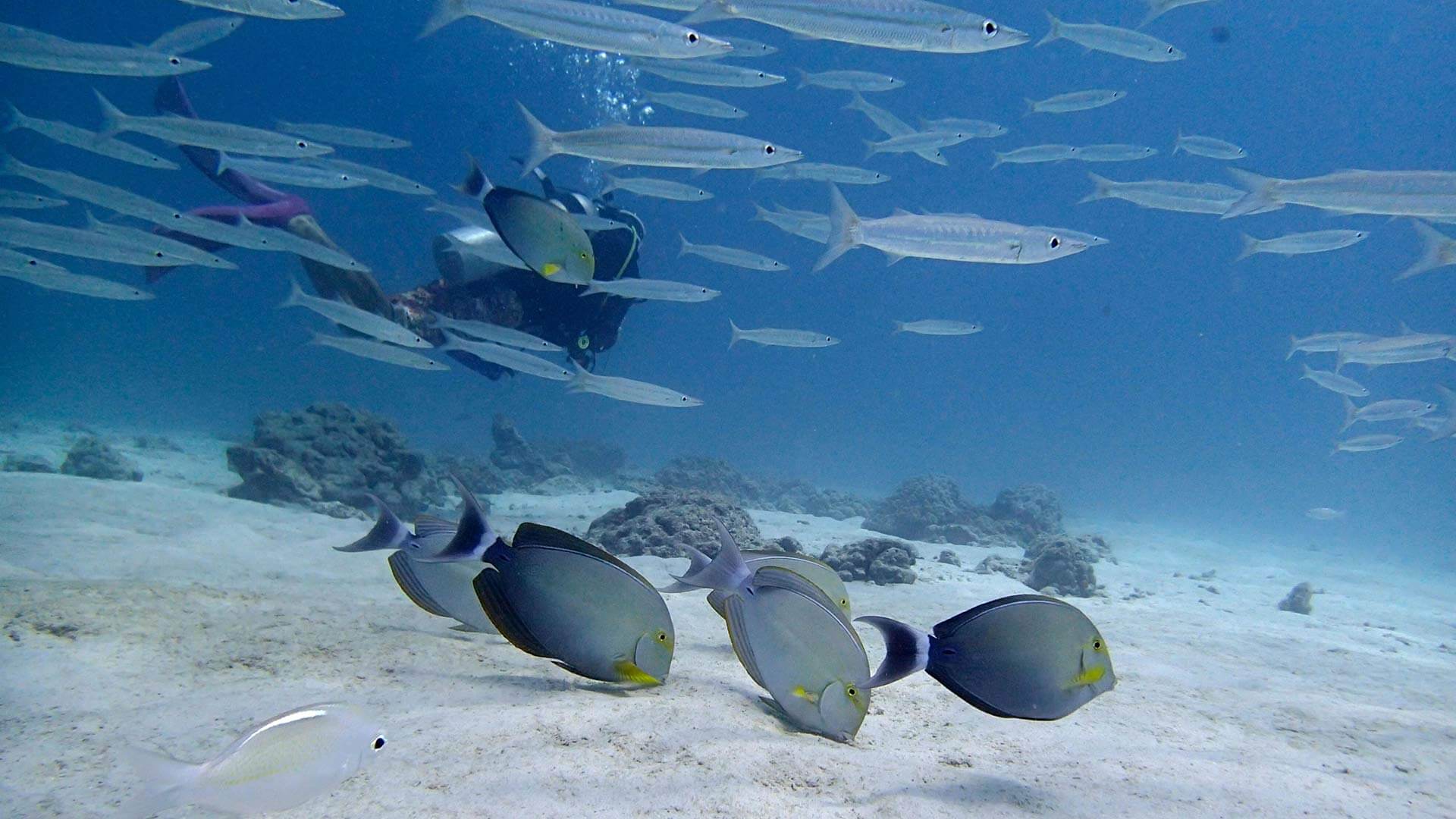
One of the most common myths in scuba diving is that going deeper means encountering more marine creatures. In reality, coral reefs thrive in shallower waters because they need clear water and sunlight to flourish. This is why the most vibrant coral is typically found closer to the surface. Healthy coral reefs support abundant marine life since many fish feed on corals, making them a crucial food source. Therefore, more coral often translates to more fish and marine diversity.

Being closer to the surface also means there is more natural light, making it easier to spot and appreciate the vibrant colours and details of marine life. Light is essential for perceiving colour, and as you descend deeper into the water, the light diminishes, reducing visibility and colour intensity. This is similar to turning off the lights in your house or stepping outside at night when colours become muted and details are harder to discern. The abundance of light near the surface enhances visibility and brings out the vivid colours of the underwater world, offering a more enjoyable and visually stimulating dive experience.

Surgeon Fish Racha Yai Padi Open Water Course Scuba Diving Liveaboard

The closer you are to the surface, the warmer the water tends to be. As an avid warm-water diver, I love diving in nothing more than board shorts and a rash guard. Most shallow dives allow you to avoid thermoclines—sudden temperature changes in the water—which makes the dive much more comfortable and enjoyable.

Diving at shallower depths also means that your air supply lasts longer. The deeper you go, the more air you consume, which shortens your dive time. In shallow waters, most divers can easily enjoy a dive lasting an hour or more. In contrast, I’ve seen certified divers use up a tank of air in just 20 minutes at greater depths. Generally, shallow dives mean more time to explore and enjoy the underwater world.

Shallow dives are also easier and safer, with a lower risk of decompression sickness. While we should always prioritize safety in diving, shallow dives generally pose less of a threat in terms of no-decompression limits, gas narcosis, air consumption, and decompression sickness.

For me, a simple dive in warmer waters, where I can enjoy vibrant colours and abundant fish, is very appealing. Although some divers prefer going deeper, and I don’t begrudge them that choice, I find shallow dives to be more rewarding. More time underwater, less equipment, and more vibrant life make shallow dives a compelling choice.

PADI Scuba Diving Courses With Aussie Divers Phuket

Send us an Enquiry

Dates for Aussie Divers Phuket IDC and PADI IE

Here is a list of the Aussie Divers Phuket PADI IDCs dates for 2026, including the PADI IE dates for Phuket.

Month
Early Preparation
IDC Course
PADI IE Phuket
Specialty Dates
January ’26
1st – 4th
5th – 16th
17th – 18th
19th – 23rd
February ’26
28th Jan – 1st Feb
2nd – 13th
14th – 15th
16th – 20th
March ’26
25th Feb – 1st Mar
2nd – 13th
14th – 15th
16th – 20th
April ’26
1st – 5th
6th – 17th
18th – 19th
20th – 24th
May ’26
29th Apr – 3rd May
4th – 15th
16th – 17th
18th – 22nd
June ’26
3rd – 7th
8th – 19th
20th – 21st
22nd – 26th
July ’26
1st – 5th
6th – 17th
18th – 19th
20st – 24th
August ’26
29th Jul – 2nd Aug
3rd – 14th
15th – 16th
17th – 21st
September ’26
2nd – 6th
7th – 18th
19th – 20th
21st – 25th
October ’26
30th Sept – 4th Oct
5th – 16th
17th – 18th
19th- 23rd
November ’26
4th – 8th
9th – 20th
21st – 22nd
23rd – 27th
December ’26
Contact Us
Contact Us
12th – 13th
Contact Us