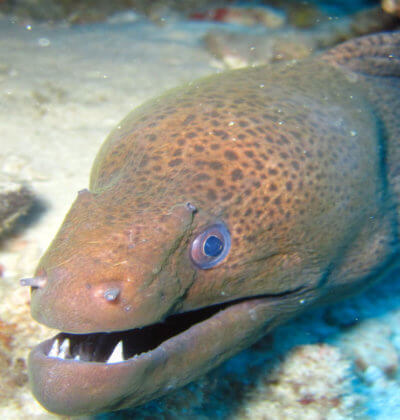

Don’t Let Age get in the Way
Scuba Diving is a unique activity that low impact and minimal skill requirement allows it to be enjoyed by most age levels and sporting prowess. Here we explore what is the oldest you can scuba dive?
However at both ends of the age level spectrum there are some precautions that need to be addressed prior to diving. With children, emotional and behavioral maturity are the major concerns. With the older generation, it is medical fitness to dive that is the major worry.
If a diver passes all of the medical requirements there is no reason why they cannot safely dive. This of course require a common since approach to the dive as well.
Aussie Divers Phuket has successfully run a number of scuba diving activities with divers with divers in their 60’s and even 70’s. Once underwater scuba diving provides a feeling of weightlessness and can be ideal for those looking for an activity that provides less stress on the body.
Divers Alert Network
DAN (Divers Alert Network) are considered the world authority on scuba diving safety and scuba diving medical concerns. There are the “go to” for most scuba diving agencies in relation to scuba diving health concerns.
They have two great articles in relation to scuba diving for the older generation. Both express a similar thoughts. Age alone is not an issue however as with all ages, medical fitness to dive is. Physical fitness is a key element for diving, basics like being able to swim to a boat and climbing back on the boat after a dive would be a minimum fitness requirement.
In the article The Aging Diver, DAN makes expresses the following thoughts.
They express a general health concerns:
The cornerstone of health maintenance and disease prevention is an annual medical examination by your physician. Physical fitness and good health are necessary to participate in scuba; a lack of physical fitness or any type of acute illness usually restricts some normal activities — including diving.
Physical fitness is a key element for diving. Generally, you should have the ability to perform activities like surface swims and entering a boat after a dive.
The most important medical consideration in a disease-free individual includes soundness of the cardiovascular system and the lungs. Before you dive, you should be free of symptoms such as coughing, congestion, shortness of breath or difficulty breathing after exertion. To some degree, cardiovascular disease affects the vessels of the heart in all older individuals. Your physician can order a procedure called a treadmill “stress” test to evaluate your cardiovascular response to exertion.
They recommend a good fitness program to promote a good cardiovascular system.
https://www.diversalertnetwork.org/medical/faq/The_Aging_Diver
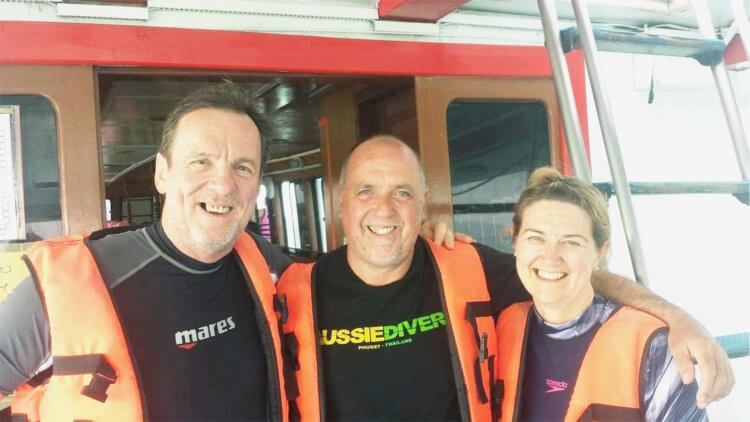
Enjoying Life Scuba Diving with Aussie Divers
Try Scuba Diving with Aussie Divers Phuket
Another DAN Report
Francis Smith also writes a great article for DAN in relation to the topic.
The responsibility for the decision of whether or not to dive is generally that of the individual and his or her physician. This decision, however, should be based on the most current diving medical information available.
Many people in their 70s and 80s continue to dive. The key to safe diving is physical fitness, not age.
A thorough cardiac workup and stress test are prudent and probably the first priorities. Many cardiologists familiar with dive medicine recommend a cardiac stress test targeting a score of 13 metabolic equivalents (METs), while others recommend a minimum of 10 METs. Either level is rigorous exercise. While most diving is relaxing, a strong current, a long surface swim or rescuing a buddy (or oneself) all require a high level of exercise tolerance.
Awareness of underlying medical issues is of practical use. The basic aches of arthritis could be confused with decompression sickness, so conservative profiles are recommended for anyone who deals with this issue. Also, diving in locations with reasonable access to medical care is prudent.
http://www.alertdiver.com/Aging-and-Diving
Try Scuba Diving with Aussie Divers Phuket
Summary
In short diving into your 60’s – 70’s should not be an issue as long as the right precautions are taken.
Prior to diving seek the right medical advice. Your local medical physician knows you best and they should be your first port of call. However often General Practitioners, if not scuba divers themselves are a little reluctant approve someone to dive based on their lack of scuba diving knowledge so they may refer you to a specific scuba diving doctor. Here in Phuket, both the major international hospitals have very good scuba diving doctors that provide a thorough analysis of your health to dive.
It is recommended if you are trying diving for the first time (PADI Discover Scuba Diving) that you try a pool session prior. This in a small way will give you some idea of the requirements to dive, both mentally and physically.
Also, the dives and dive sites should be taken into consideration to reduce the physical and physiological impact on the body are reduced. Shallow dives in protected areas with minimal currents, such as, the Racha Islands will make the dive easier. As mentioned above, avoiding long swims back to the boat should also be planned.
Don’t let age be a barrier to experiencing scuba diving. It is never too late to experience the wonderment of the underwater world.
Try Scuba Diving with Aussie Divers Phuket

Posted in Everything Else on .