
Why can’t I fly after scuba diving?
Here is a blog that will try and explain why you can’t fly after scuba diving.
Understanding the risks of flying after scuba diving
We have all been taught during our PADI Open Water Course that we cannot fly after scuba diving. You should recall that we cannot fly for 12 hours after a single dive, 18 hours after multiple dives and if we can we should ideally wait 24 hours.
It is generally understood that the reason why we do this is to avoid the increase risk of decompression sickness. To understand how this increased chance may materialise we need to understand how decompression sickness normally develops. To do that we need to understand what is actually occurring in our body.
In very simple terms, when a gas (including air) and a liquid (our body is mostly water come in contact with each other, eventually they will reach a state of equilibrium i.e they will eventually both will end up at the same pressure. The gas that builds up in our body after scuba diving is nitrogen.
What you learnt in your Open Water Course
To briefly touch on what you learned in your PADI Open Water Course, when we breath air (79% Nitrogen/ 21% Oxygen) our body uses some of the oxygen and then expels the rest when we exhale. While some of the nitrogen is expelled in exhalation, a lot of it is expelled through our body. This occurs through very small bubbles called doppler bubbles and you body is currently doing that as your read this article.
The deeper you dive and the longer you stay underwater the more nitrogen will be in your body. The longer you are out of the water the more nitrogen is released from your body.
Again, very simply, the rate that the nitrogen is expelled from our body determines if we will get decompression sickness or not. There are a few outside factors that control the release rate. Dehydration is one of the most common, rapid accents, poor health and fatigue are some more.
Analogy
The best analogy and what I like to use when teaching students is a can/bottle of Coke.
We all know that the pressure inside a can of Coke is high. In the refrigerator, the resting pressure on the can is between 1.7 – 2.0 ata/bar. At room temperature it could be as high as 3.44 – 4.1 bar/ata. When open that can the inside pressure will eventually equal the outside pressure (atmospheric pressure) which is normally 1.0 atmosphere/bar.
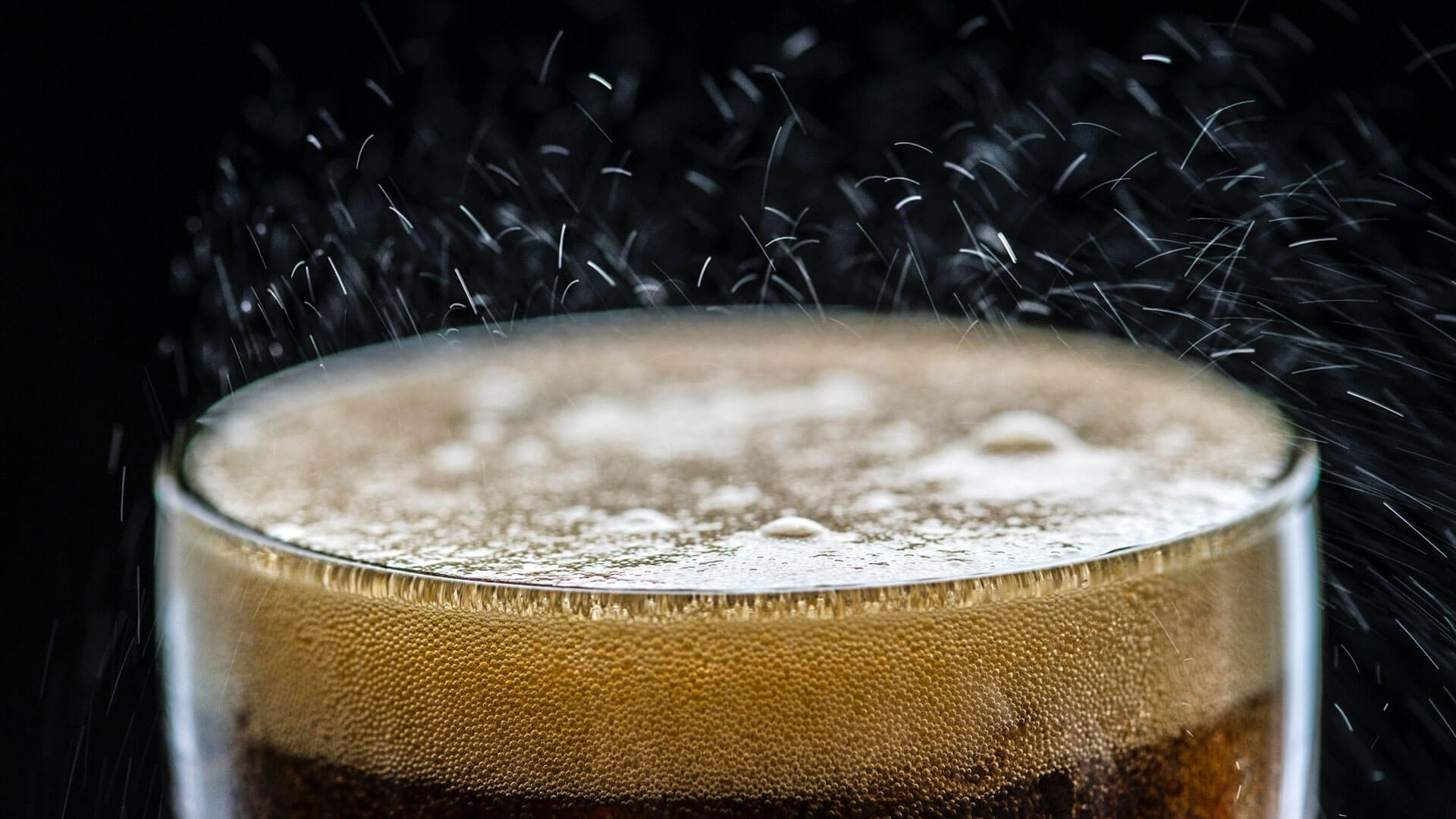
Coke Bubbles Scuba Diving Decompression Sickness Aussie Divers
You can do an experiment at home to see this at work. If you open a can/bottle of Coke and pour it into a glass. What you will see is the high-pressure gas in the form of bubbles (from the can) equalizing with the pressure of our normal air. Eventually after a few hours or so the Coke will stop bubbling. Once it has done this the pressure in the Coke and the atmospheric have reached equilibrium or become the same.
Scuba Diving at Depth
This the same as what happens after we dive. When we dive the pressure increases in our body. This increase of pressure is the pressure group on our RDP that you may have used in your PADI Open Water Course. Say we did a dive to 30 metres, as me know, the pressure there would be 4.0 ata/bar, 18 metres 2.8 bar/ata and 12 metres 2.2 ata/bar.
When we dive to 30 metres or any other depth, our body does not instantly become that pressure, it takes time. It is similar to how the gas releases. If you were to do a dive to 30 metres, at the start of the first dive your body pressure would be 1.0 ata/bar, (this could be more on subsequent dives) and start heading towards 4.0 ata/bar as we get deeper heading to 30 metres. As we learnt in out PADI Open Water Course, that pressure inside our body (pressure group) would depend on how long the dive went for and how deep you dived.
Towards the end of the dive, divers try to actively reduce this body pressure. Recreational divers do this by doing a three minute safety stop and tec divers do this by doing decompression stop.
Fish View Aussie Divers Phuket
At the Surface
Ultimately, when you reach the surface, your body has a higher pressure than when you started the dive (like the can of Coke). It immediately starts to release that gas in an attempt to become equal with the outside pressure (atmospheric pressure). As with the can of Coke in the glass this will take time. On the RDP this was where the surface interval became important. The longer you are out of the water, the less nitrogen we have in our body.
In an attempt to avoid decompression sickness, our body is designed to do is release that at a nice safe rate. The body likes to release that gas (nitrogen) from our body with an outside pressure of 1.0 ata.
Cabin Pressure
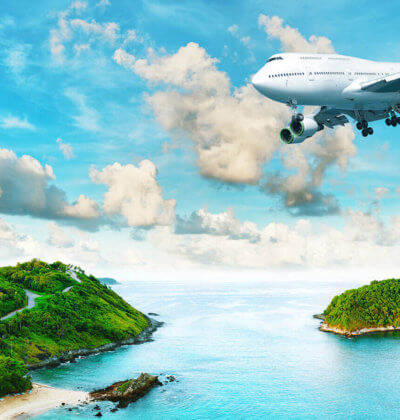
Here is the issue with flying. When we fly the cabin pressure is between 0.75 – 0.82 ata/bar. This is substantially less than our normal atmospheric pressure. This means that the nitrogen in our body will release quicker than normal and as a result we expose ourselves to a much greater risk of getting decompression sickness. This is the primary reason why we cannot fly after scuba diving.
Further to that, a rare occurrence that would place us at a very high risk is if the plane would to lose cabin pressure. This is a very very rare event however if it was to occur, the outside pressure at cruising altitude is 0.22 bar/ata. This eventually would become the cabin pressure. If this was to occur, the nitrogen would release from our body very quickly. The Coke analogy would be the difference between opening the Coke normally or shaking the can/bottle of coke and then opening it. Obviously this would be quite bad and it would not be a matter of if you got DCS, but how badly you got it.
For the record, if a plane was to lose cabin pressure at cruising altitude, there would be a lot of other health risks not just the DCS. This is also the reason why we should watch the pre fight presentation and why we should know what to do if the small oxygen mask drops down in front of us when we are flying.

Phuket Scuba Diving Places to Stay Patong Chalong Kata
Flying after Scuba Diving Rules
As a result of this, the scuba diving industry has come up with rules for flying after scuba diving. If you were to do just on single dive for the day the suggested time between the dive and flying is 12 hours. This should give you enough time to release the excess nitrogen from your body.
If you were to do multiple dives in a day, the recommended time is 18 hours between scuba diving and flying. This is because, it is assumed that after multiple dives your body and therefor it takes longer to release.
Lastly, if possible both PADI and the Divers Alert Network recommend that you wait 24 hours. The reason we do this is as our Irish friends would say “to be sure, to be sure”.
Here is a few quick tips to help you avoid decompression sickness before a flight. Stay well hydrated, avoid deep dives the day before flying, avoid excessive alcohol and get plenty of rest.
Please be aware that this blog is a basic explanation. When it comes to decompression sickness there are many varying factors that could influence you getting it. No two people are alike and scientists and the medical industry are finding new and different information on the subject.
The best way you can prevent decompression sickness and to dive conservatively and take the recommended precautions.
Take care and happy scuba diving.

Posted in Diving Health on .