Working in Phuket Scuba Diving Instructor Divemaster
Here is some information about working in Phuket as a scuba diving instructor or divemaster.
Video: Go Pro With PADI And Aussie Divers Phuket
Working as a PADI Pro in Phuket
As a scuba diving business owner in Phuket hardly a day goes by where I don’t get an email requesting employment opportunities here in Phuket. Here is what you will need to do to work in the Phuket Scuba Diving Industry and a Instructor or Divemaster. And why not, Phuket is one of the best places in the world to work, live and teach scuba diving.
These requests come from both PADI Divemasters and PADI Instructors and often emails also have them wishing to work for free in lieu of course fees or even just for free diving. However, Thailand, as with most countries in the world, has laws that require to obtain permission to work in the country. In Thailand, it is a requirement to obtain a Department of Employment/Ministry of Labour Work Permit. This process is require for paid, unpaid and most volunteer work.
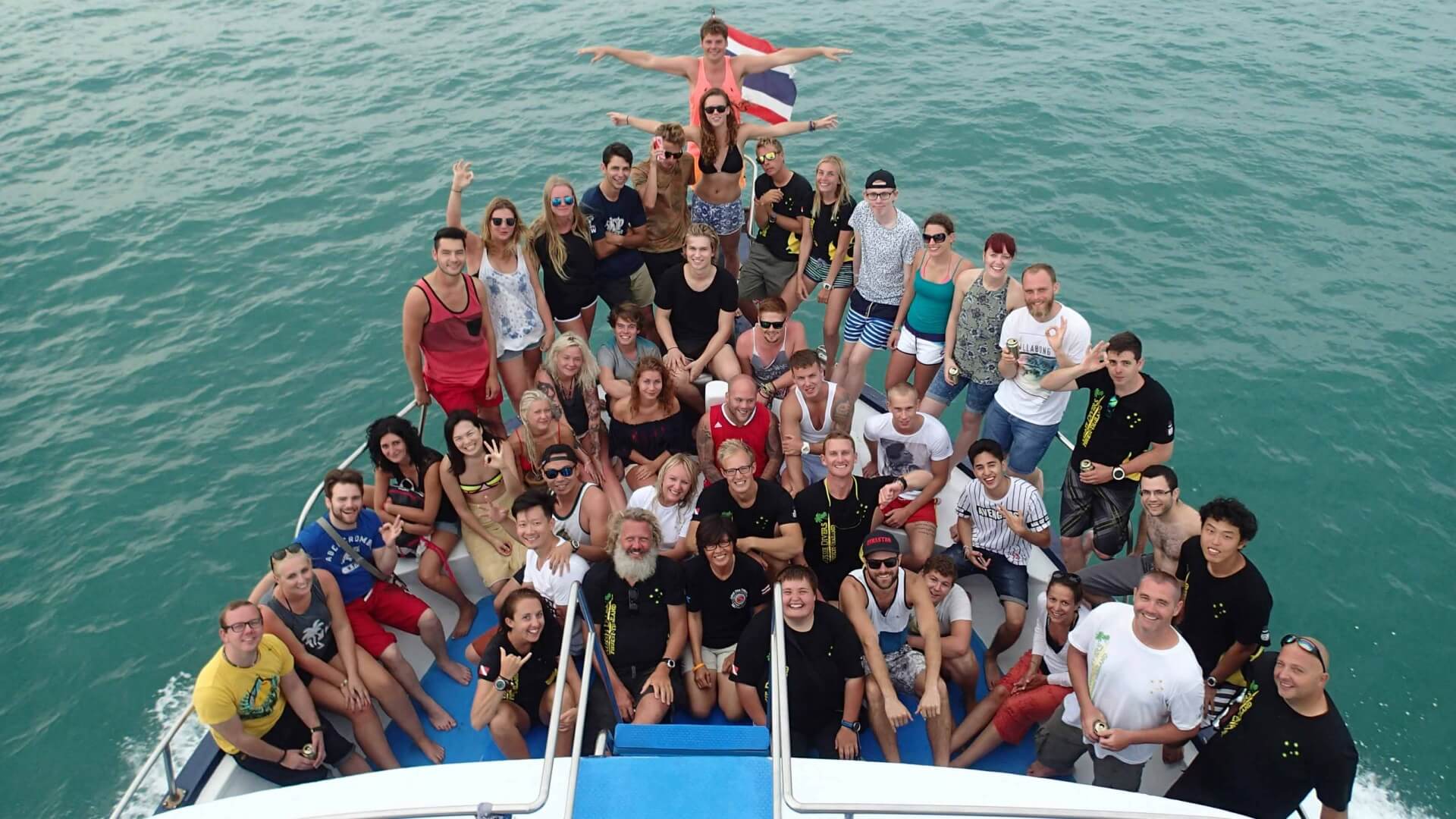
Aussie Divers Phuket Team Lara Andre
Work Permit
As mentioned, for any non – Thai to work in Thailand they must be the holder of a Department of Labor Work Permit. This is important because working without a valid work permit, can result in heavy fines for both the worker and the employer or jail time or in some cases deportation. As perviously mentioned, unpaid work requires a work permit as well.
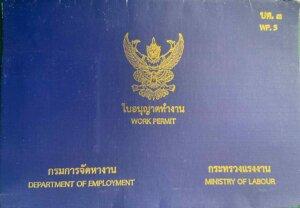
Thai Work Permit Aussie Divers
There are very few jobs that a non Thai citizen can do in Thailand and there is a set criteria to do this. In the scuba diving industry we are employed under the section that states – “employed in a sector where qualified Thai employees cannot be found”. There are very few Thai scuba diving instructors and given the size of the industry here to make it all work successfully Thailand needs to import labor. As we will talk about later, this applies to Instructor level, however unfortunately, divemaster does not fit into this category.
A work permit is normally something that you need to organize yourself. Generally it is not something that the scuba diving business will prepare for you. It takes time to process a work permit and normally takes between 4 – 6 weeks. It is a bit of an effort however it will be worth it in the end.
Getting a Work Permit
Obtaining a work permit for Phuket is not a simple process and will need a lot of documentation and the involvement of accountants/lawyers and different Thai Government agencies and of course money (THB 60,000/USD 2,000 plus).
Getting a work permit often requires you to form your own company. The size of the company will determine the number of work permits that will be allocated. The bigger the company the more tax you will pay. Some start a company with just one work permit, others will start a bigger company (2 work permits) an then share the taxes and yearly accounting fees.
In most cases, a part of the process you will need to leave the country at least once and that will most likely be to Malaysia or sometimes it requires you to return to your home country.. The accountant/lawyer will make the process easier for you however it is still a drawn out process. There is a possibility that you may be able to purchase a company (someone leaving Phuket) or buy into a company with someone that has a extra work permit available. In this scenario the process may be quicker and less expensive however it will still take quite a bit of work.
For this reason, Phuket/Thailand is not a very good place for short term scuba diving employment. If you want to work in Phuket as a dive instructor you should be looking at a long term placement (years).
Further to this the work permit will be very specific to what tasks the holder can do. For the scuba diving industry the tasks are very limited and basically come down to one main task and most commonly is “Teaching Scuba Diving”.
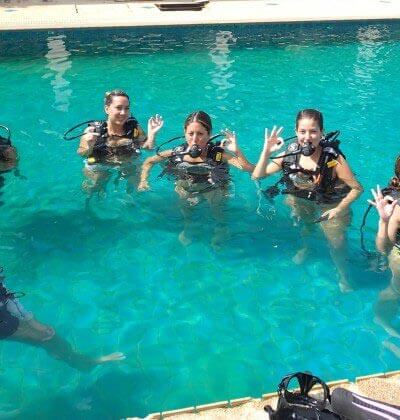
First Open Water Dive Aussie Divers Phuket
You can only teach Scuba Diving
Unfortunately the term “Teaching Scuba Diving” is taken literally by the authorities which means a lot of the common tasks of a dive instructor such as, working in the dive shop, cleaning equipment, driving a company vehicle, collecting customers, driving a boat, cleaning the shop, handling payments etc are all ILLEGAL.
In some cases a work permit may be written to state a specific address (dive shop) and it will then also state “Sell Scuba Diving”. This would then give the holder that added chance of selling scuba diving courses and trips. Again it does not allow the holder to take money or do any of the other menial tasks around the dive centre.
This is the Thai way of protecting the jobs for Thai nationals which at the end of the day is a good thing. It assists in generating more employment for the local population.
Divemasters
What is also technically illegal is the Divemasters main role, guiding customers. As there is a number of Thai Divemasters, guiding a dive is considered a job that a Thai national can do and therefor not open or available to non Thais. A Divemaster does not meet the employment condition of – employed in a sector where qualified Thai employees cannot be found
As a Divemaster in theory cannot teach scuba diving, it is virtually impossible, if not illegal for a PADI Divemaster to work in Thailand conducting Divemaster only duties. As a part of the documentation needed for your work permit you will need to provide proof of you PADI certification level. It is highly unlikely you will be issued a work permit as a PADI Divemaster.
All dive Instructors will need to be in current teaching status to get a work permit.
Where to Start
Speak to people who are already working in the industry here and get a feel for what they think. Phuket can be a great place to work and at the same time a challenging place to work. Nearly all dive instructors work here as “Freelance instructors”. Sometimes, it is a bit of a battle to get work and only the best survive. The cost of living here is relatively inexpensive and consequently wages are low. Most good instructors will make a nice wage to live off but nothing compared to your 9-5 job back home in a developed country.
It is quite common for new instructors to not make enough to live from and will normally withdraw from past savings. **2023 Update** Sine the 2020 – 2021 pandemic, Phuket, as with a lot of places around the world are short on staff. Currently Phuket is no different and there are excellent employment opportunities here in Phuket for those willing to invest in a work permit.
Make sure that Thailand is right for you. Understand the system here first. Depending on where you live it may pay to make a visit to Phuket/Thailand prior to committing to work here.
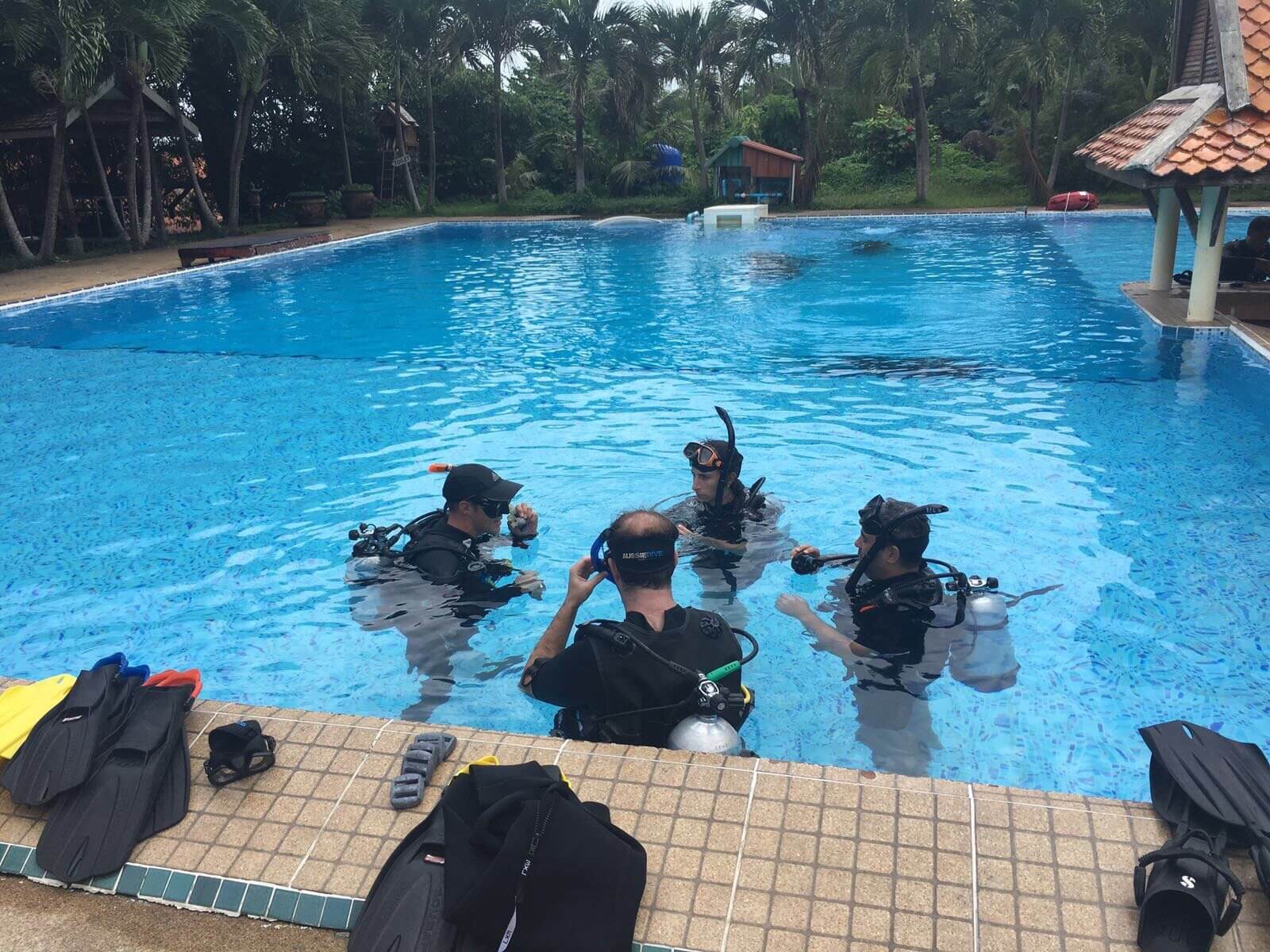
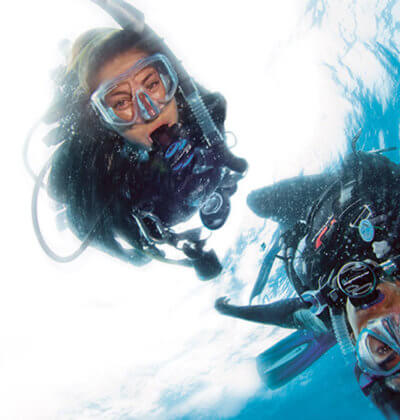
Learning The Dive Skills Aussie Divers Phuket
Plan to arrive at the right time
The Phuket high season and liveaboard officially start mid October – November and finishes around the first week in May. Be ready to go by this time. Arriving early December will not get you a work permit in time for the Christmas rush. Arriving in April will see you have many months with not much income.
The Process
Not a lot makes sense when applying for the work permit in Thailand.
Apply for a non-immigrant visa.
Before you start you company or apply or be issued with your work permit you must be in possession of a non-immigrant (B) visa first. This is required to apply for a Thai work permit. This can be a bit confusing as to apply for a work permit you need a non-immigrant visa. To get a non immigrant visa you need to have a guarantee of employment. It is a bit of the chicken and the egg scenario.
The non-immigrant visa will be first however your lawyer/accountant will sort this for you. This is when you will leave the country, most likely to Malaysia to apply for the non – immigrant visa. The application in most cases cannot be done in Thailand. In some cases you may be able to do it in your home country first. This is very rare and you would need guaranteed employment first.
Make sure you seek a reputable accountant/lawyer to set up your company
Phuket is like any other place in the world and there are good and bad people in all fields here. Make sure that you find a reputable lawyer or accountant. Ask around speak to other instructors and dive shop owners. They should be able to guide you in the right direction.
Try Wan at Interacc Accounting. She looks after a great deal of the scuba diving industry in Phuket.
Kathu 51/112-113 Moo6 Prabaramee Rd., Kathu, Phuket 83120 Tel: (+66) 076-323909-11 Fax: (+66) 076-323912
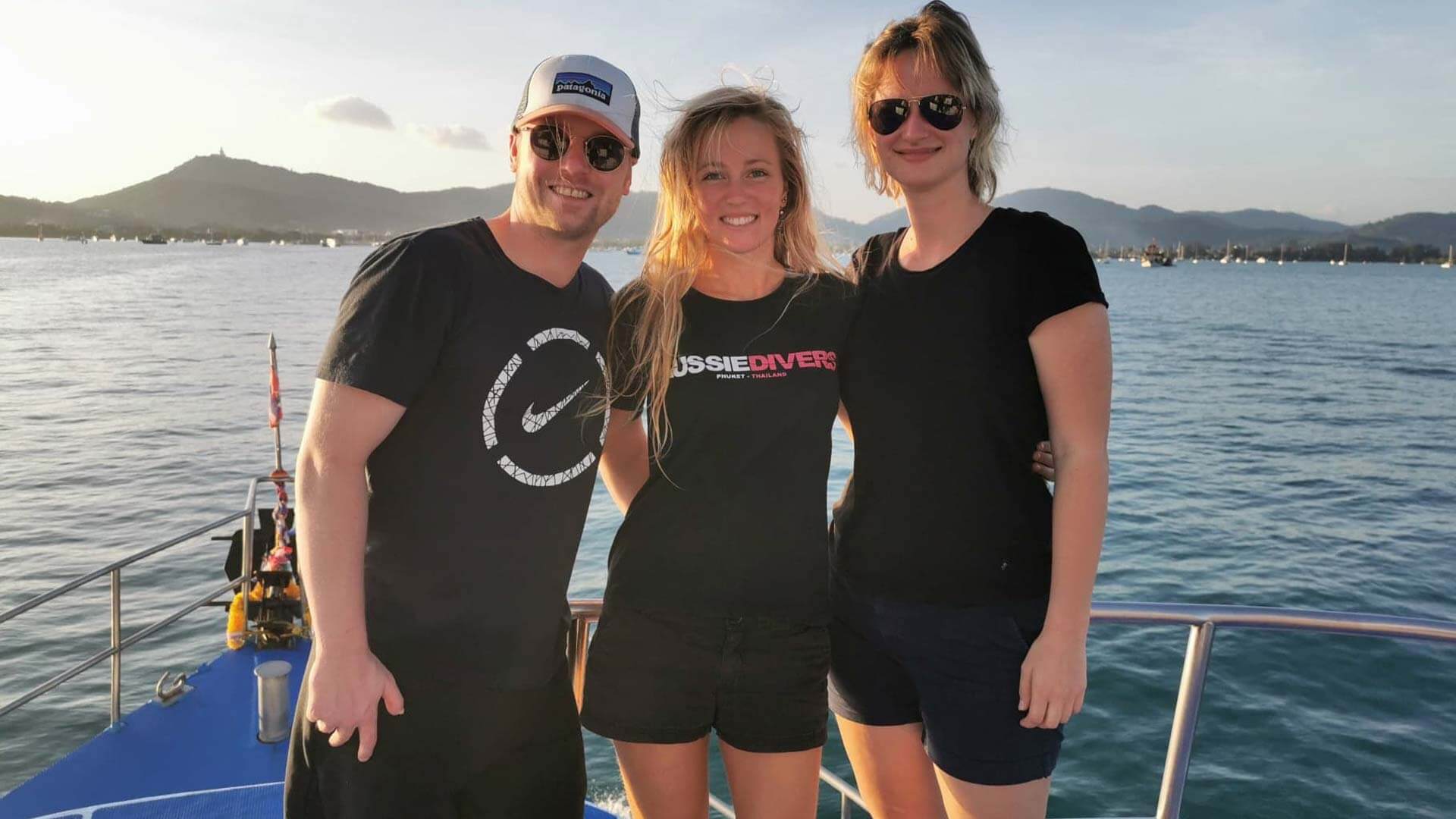
Lara German PADI Instructor Aussie Divers
Getting Started
Documents you will need to provide your accountant to get a work permit
A valid passport, copies of every page signed and dated.
Your copy of your non immigration visa.
A copy of your CV or Resume indicating your educational qualifications with a full list of your in detail of your past employment, position or rank, duties that you previously performed along with your employer details and length of employment.
Medical certificates are required abd more than six months old from a first-class licensed physician in Thailand. Stating that you are of sound mind and not suffering from the following deceases: Leprosy, Acute Tuberculosis, Elephantiasis or Syphilis. It also must state that you are not an alcoholic or addicted to drugs.
Have at least three 5×6 cm. head shot photographs. They must be no more than 6-months old and should be in formal clothing (collared shirt or suit)
You will need a copy of all your PADI Instructor certificates showing that you are in current teaching status and with all your specialty course information.
The accountant/lawyer you employ will then ask you to do a number of other tasks such as photographing you place of employment along with signage of the same place.
You will also have to prepare a company stamp/seal to place on all of the documentation.
Have a good CV ready and deliver it personally to the dive centre
As mentioned at the start of the blog, dive centres get many emails requesting employment. A lot end up in the junk box and are never read by the employer. The best way to get employed is to be in Phuket visit the dive shop and personally hand in your resumes. Look presentable, yes you are in a relaxed environment but an employer still wants presentable staff.
Your CV should include a copy of your current teaching status, a print out of your PADI credentials and current certifications, a list of specialties you can teach, copy of your work permit and business name and of course any languages you can teach in. Please do not start the CV with “I have a passion for scuba diving”. Don’t send an email saying “I am in Phuket looking for work” Make the effort, visit the dive centres, in fact visit all of the dive centres.
Languages, languages, languages. Phuket is one on the most popular holiday destinations in the world. Aussie Divers Phuket, in her 11 years to date, has had divers from in excess of 100 different countries. Although not essential, being able to teach in multiple different languages is highly desirable.

Scuba Equipment Aussie Divers
Take what ever work you can get
You need to prove yourself. You will start off slow, whether it is one refresher or one DSD take it. Show that you are the good instructor that you say you are, show that you have good customer service and show that you have a passion for the sea. Your first months here will be slow. The better you are the more work you will get. Do not expect four open or advanced open water students any time soon.
Have financial back up
Your first few months may be slow. Make sure that you have some resources to fall back on.
Don’t give up
Yes, it is a lot of hard work but hopefully you will get there.
Please understand, even though it does seem a lot to do, the process is still easier that what it takes to work in other countries, particularly places like Australia and the USA.
Live the dream and work in Phuket as a scuba diving Instructor or divemaster.

Posted in Everything Else on .