The Importance of Equalising Your Ears Frequently on every dive
Scuba diving is a relatively safe sport, as long as you follow the rules. However one of the most common injury’s we see is ear problems after not improper technique or failure to equalise the ears. It is vital that you stop your decent/going down plus let your guide/instructor/buddy know if you have any equalisation issues whilst diving. Equalising your ears is of importance and you should know how to do it correctly.
When we are scuba diving the term “equalising” means to equalise pressure between the inside of your ears and the underwater environment. Human ears have the natural ability to compensate external pressure from the surrounding world and this mostly happens without you even noticing that it happens (like in an airplane, or when you drive up or down a mountain).
However, underwater is not the kind of environment to which human body is very well-adapted, meaning the ears will struggle to maintain a balanced pressure the deeper you go. That is why it is important to help your ears and learn how to equalise frequently and properly.
If you fail to listen to your instructor or your body and do not equalise properly, or continue to descend/go down when you have not equalled properly, then you may end up damaging your ears. This can range anywhere from slight bruising to the ear through to torn or burst eardrums, all of which is treatable.
Depending on how badly you damage your ears it is mostly treatable within 1-3 weeks with antibiotics, ear drops, staying dry and rest.
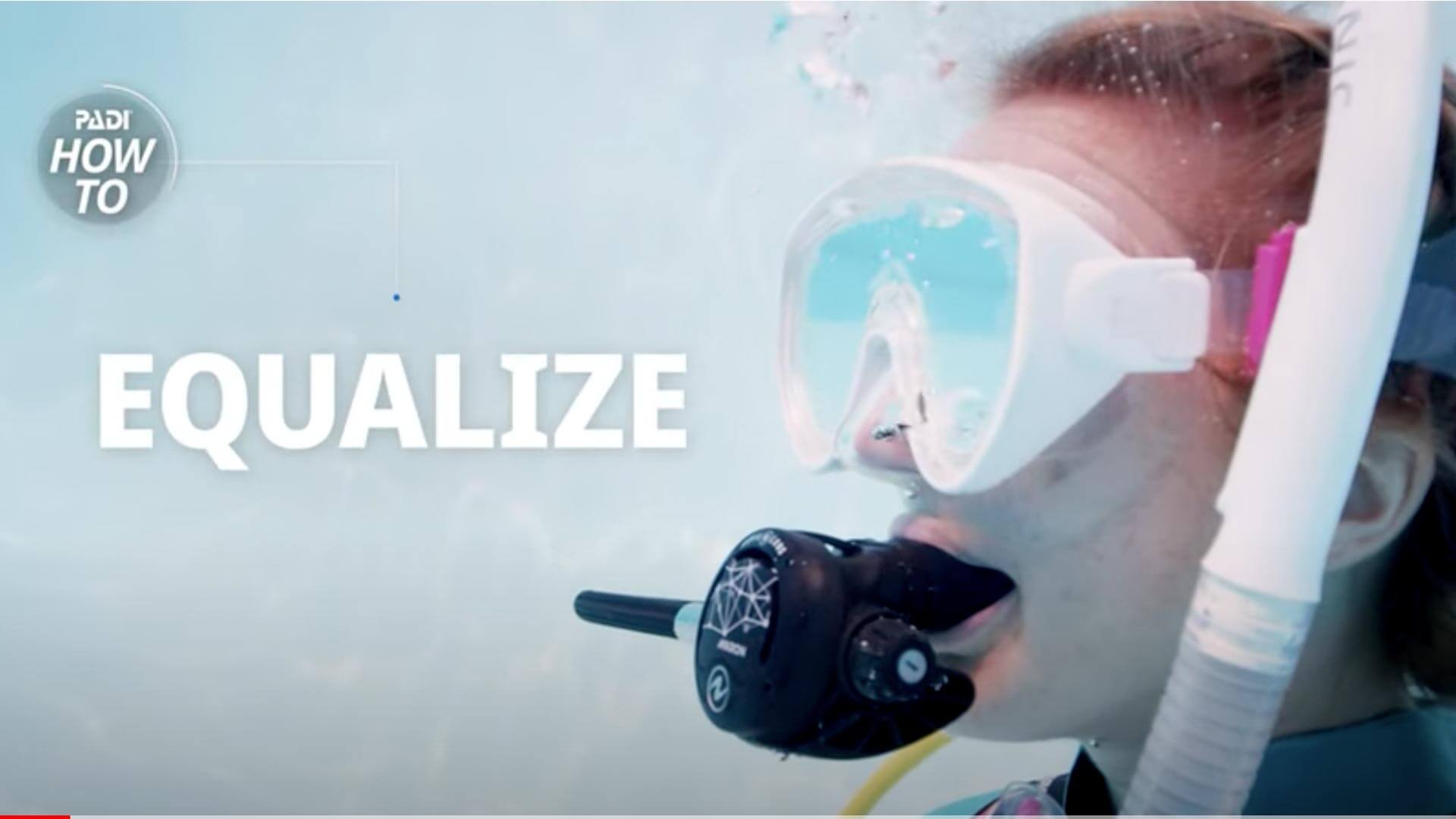
PADI How To Equalise Video
 PADI How To Equalise Video
Whats happing in our ear when Scuba Diving
As we enter the water and start going down the water pressure keeps on increasing the deeper we go and the more water/weight we have above us. The only way to compensate this increase in pressure is by adding air to our ears & pushing the ‘Eustachian tube’ in your ear outward. This Eustachian tube is a small tunnel than runs from the middle ear space to the back of the nose. It also connects the middle ear to the throat.
One of the easiest ways for the divers to equalize their ears is to simply to swallow. Even underwater with the regulator in your mouth, it is not a difficult task and many divers prefer his method over the others. Another easy method is to pinch the nose and blow air gently, with emphasis on gently, never ever try to forcefully equalise!
We always remind our students & divers to equalize often and gently when descending for the dive or when changing the depth during the dive to prevent discomfort or worse – ear injuries. If you feel you can’t equalize or feel any form of pain or discomfort, stop the descent and try again. If none of the above techniques help, it is always safer to abort the dive.
10 Tips for Easy Equalisation
Middle-ear equalization is a basic, required sill that every diver needs to do on every single dive, frequently. Proper technique enables the equalization of the pressure in the sinuses and middle-ear spaces with ambient (surrounding) water pressure. If you are doing it properly you should just feel your ear “pop” like it does in an aircraft or going up/down a big hill, you should not feel any pain or discomfort.
Aussie Divers Open Water Bat Fish
Here are 10 tips from PADI & DAN for easy equalizing
1. Listen for the “pop”
Before you even board the boat, make sure that when you swallow you hear a “pop” or “click” in both ears. This tells you both Eustachian tubes are open.
2. Start early
Several hours before your dive, begin gently equalizing your ears every few minutes. “This has great value and is said to help reduce the chances of a block early on descent,” says Dr. Ernest S. Campbell, webmaster of “Diving Medicine Online.” “Chewing gum between dives seems to help,” adds Dr. Campbell.
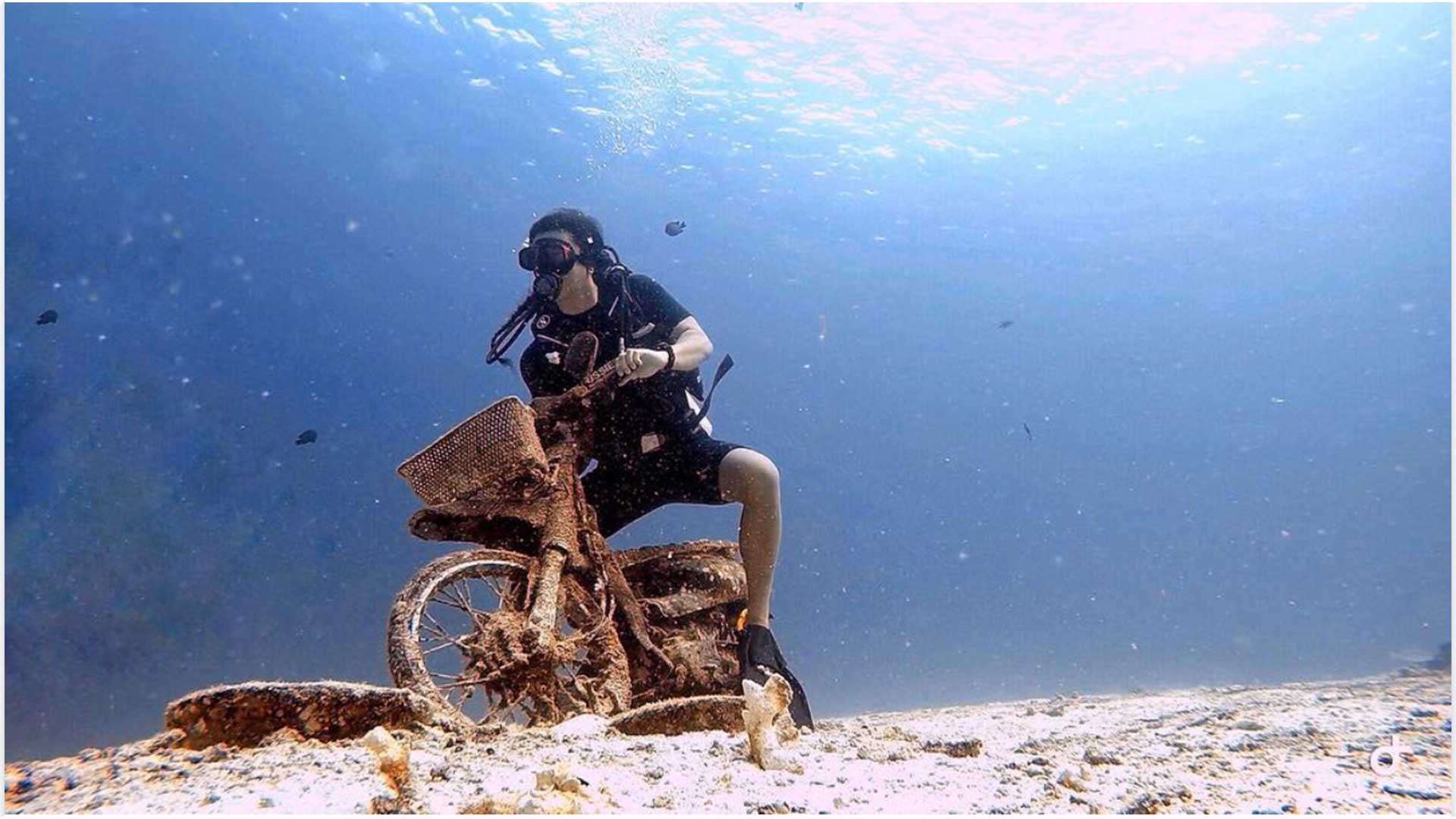
Aussie Divers Phuket Racha Yai Motorbike
3. Equalize at the surface
“Pre-pressurizing” at the surface helps get you past the critical first few feet of descent, where you’re often busy with dumping your BCD and clearing your mask. It may also inflate your Eustachian tubes so they are slightly bigger. The guide here is to pre-pressurize only if it seems to help you and to pressurize gently.
4. Descend feet first
Air tends to rise up your Eustachian tubes, and fluid-like mucus tends to drain downward. Studies have shown a Valsalva maneuver requires 50% more force when you’re in a head-down position than head-up.

Similan Island Bay Scuba Diving Aussie
5. Look up
Extending your neck tends to open your Eustachian tubes.
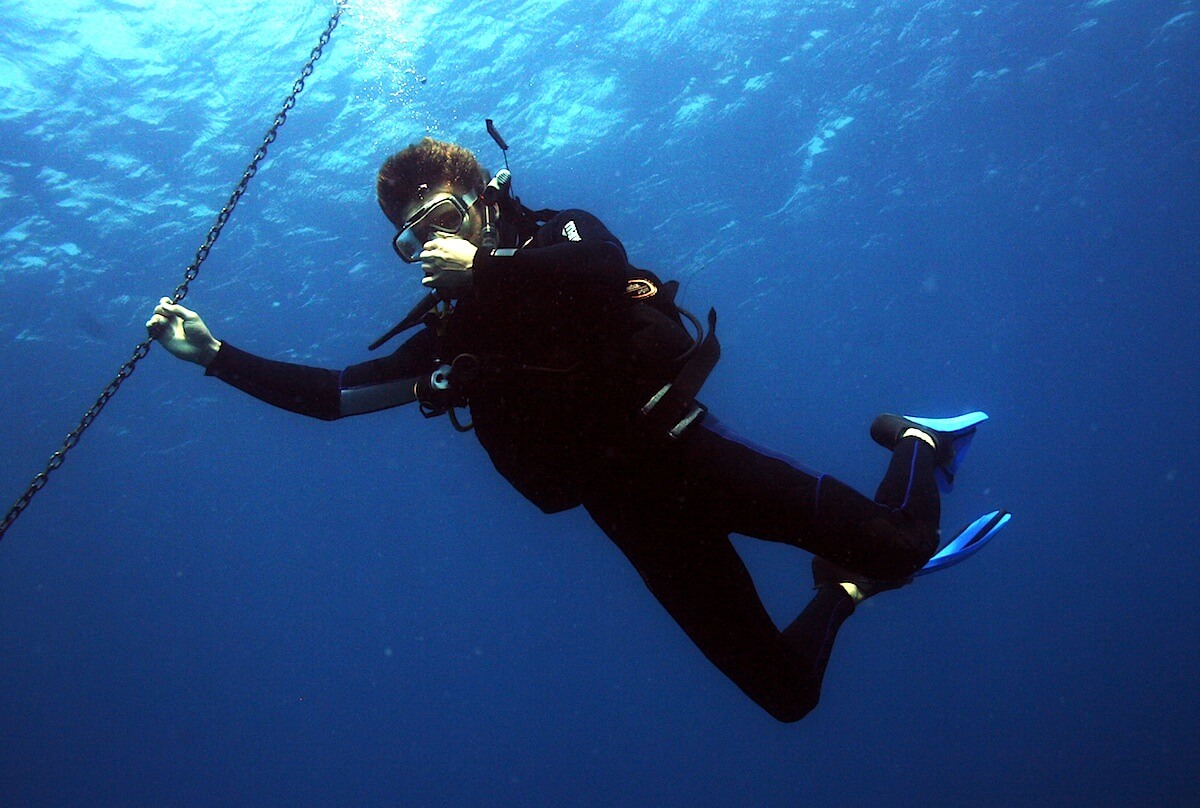
6. Use a descent line
Pulling yourself down an anchor or mooring line helps control your descent rate more accurately. Without a line, your descent rate will probably accelerate much more than you realize. A line also helps you stop your descent quickly if you feel pressure, before barotrauma has a chance to occur.
Middle-ear equalization is a basic, required diver skill that enables the equalization of the pressure in the sinuses and middle-ear spaces with ambient pressure. Here are 10 tips for easy equalizing:
Pulling yourself down an anchor or mooring line helps control your descent rate more accurately. Without a line, your descent rate will probably accelerate much more than you realize. A line also helps you stop your descent quickly if you feel pressure, before barotrauma has a chance to occur.
7. Stay ahead
Equalize often, trying to maintain a slight positive pressure in your middle ears.
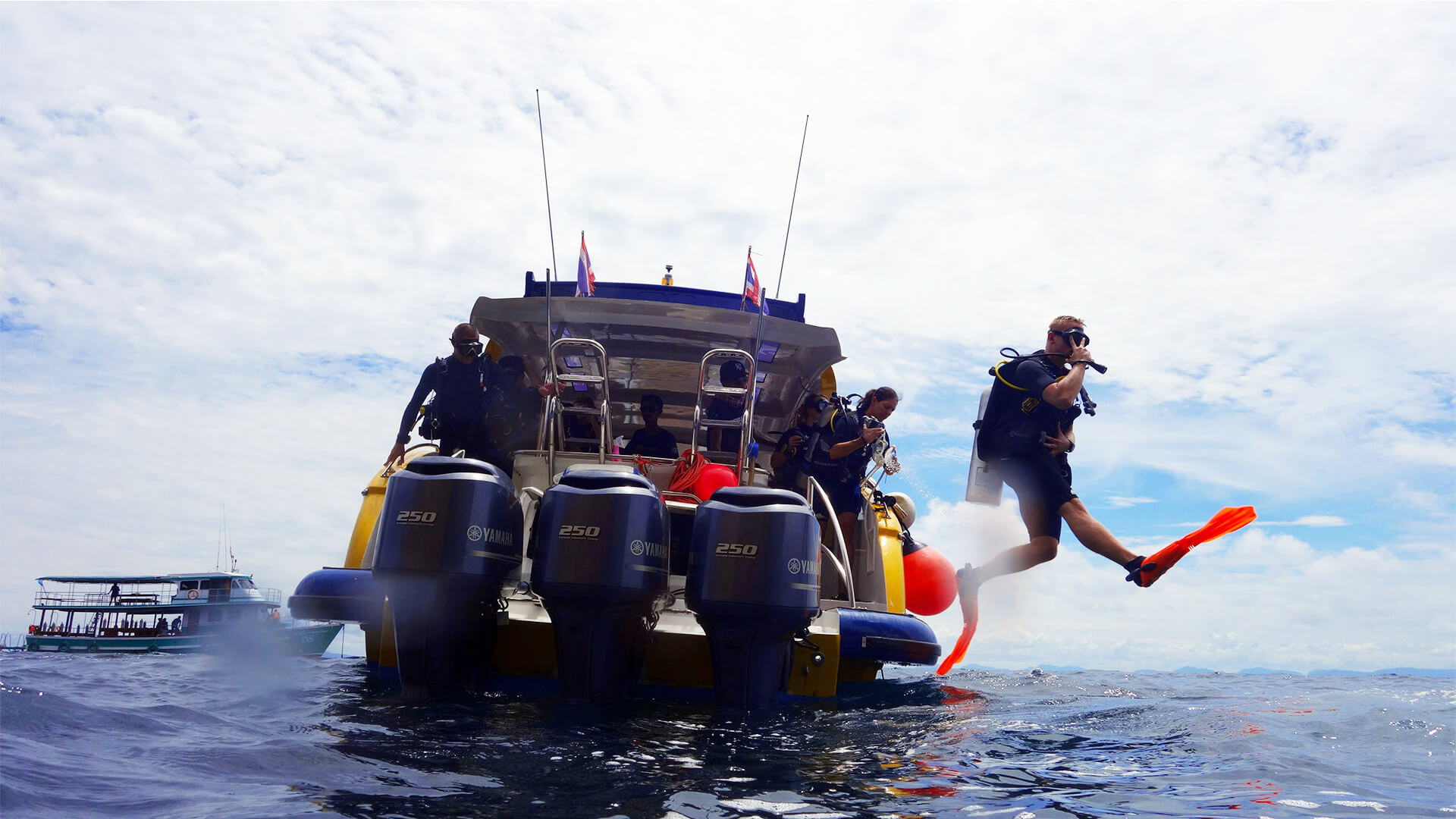
Aussie Divers Phuket Luxury Giant Stride
8. Stop if it hurts
Don’t try to push through pain. Your Eustachian tubes are probably locked shut by pressure differential, and the only result will be barotrauma. If your ears begin to hurt, ascend a few feet and try equalizing again.
9. Avoid tobacco and alcohol
Both tobacco smoke and alcohol irritate your mucus membranes, promoting more mucus that can block your Eustachian tubes.
10. Keep your mask clear
Water up your nose can irritate your mucus membranes, which then produce more of the stuff that clogs.
Practice Makes Perfect:
Divers who experience difficulty equalizing may find it helpful to master several techniques. Many are difficult until practiced repeatedly, but this is one scuba skill you can practice anywhere. Try practicing in front of a mirror so you can watch your throat muscles. For a list of methods used to equalize your ears, check out this DAN blog on How To Equalize Your Ears.
If in doubt speak to your PADI Professional.

Bay 2 Racha Yai Phuket Scuba Diving Best
Get More Information Here HereDivers Guide to Ears – Download PDF

Posted in Helpful Diving Info on .