
What You Need to Know in 2025
Thailand’s coral reefs are among the most vibrant and diverse in the world. But with growing tourism, these ecosystems have become increasingly vulnerable to damage. In response, the Thai government has introduced new nationwide regulations for both snorkelling and scuba diving — aimed at improving safety and preserving delicate marine environments for future generations.
Announced through the Royal Gazette and enforced by the Ministry of Natural Resources and Environment, these measures are now in effect across the country, including popular destinations like Phuket, Racha Islands, Phi Phi, the Similan Islands, Koh Tao, and Krabi.
The Nation – Thailand Clampdown on Underwater Photography by Scuba Divers
Bangkok Post – Diving trainees, instructors banned from taking photos underwater
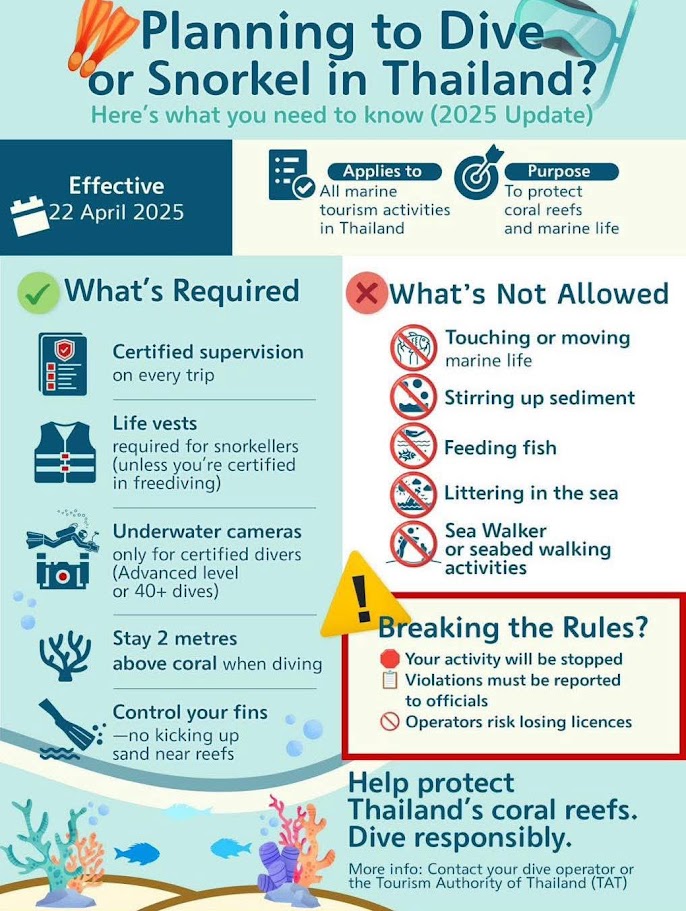
🛟 Snorkelling Rules – Life Jackets Now Mandatory
In a bid to increase safety and reduce the environmental footprint of snorkellers, the new regulations require all snorkellers to wear lifejackets while in the water — unless they hold a freediving or scuba diving certification.
What does this mean for holidaymakers?
- If you’re planning to snorkel off Phuket, Racha Islands, the Similan Islands, Phi Phi, or any other part of Thailand, you must wear a buoyancy aid at all times unless you are a certified diver or freediver.
- This applies to all boat trips, beach snorkelling activities, and island-hopping tours.
- Tour operators are now required to enforce this rule, and local authorities may inspect for compliance.
Why the change?
- Better crowd management in protected marine zones.
- Increased safety: Lifejackets reduce drowning risks and protect inexperienced snorkelers.
- Environmental protection: Lifejackets reduce uncontrolled diving or kicking, which can damage coral.

📸 Underwater Photography Rules – Certified & Experienced Divers Only
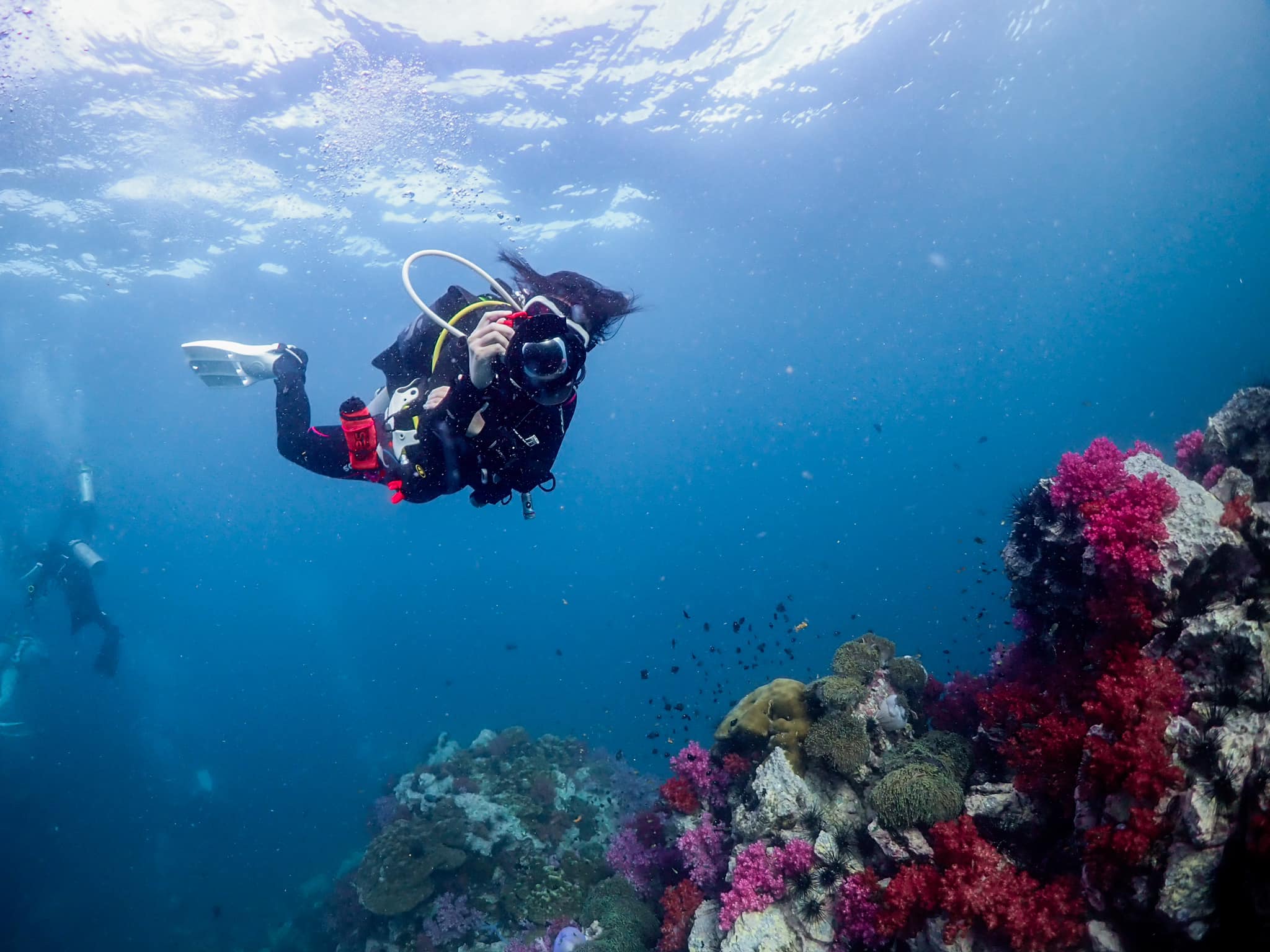
Thailand has also introduced new restrictions on underwater cameras and video devices, designed to reduce environmental harm caused by divers with limited experience.
The new rules state:
- Only divers who are certified to Advanced Open Water level (or higher) and have logged at least 40 dives may carry or use an underwater camera or GoPro.
- These divers must be able to present their logbook or certification card upon request by marine park officials or rangers.
- Divers who do not meet these requirements but wish to take photos underwater must be enrolled in a recognized underwater photography course with a qualified instructor.
Why these restrictions?
- Environmental Damage: Cameras distract inexperienced divers, leading to buoyancy loss, accidental reef contact, or stirring up sediment that smothers coral and disrupts marine life.
- Controlled Impact: By limiting underwater photography to experienced divers, the authorities aim to reduce human-caused damage to reef ecosystems and vulnerable species like seahorses, nudibranchs, and sea turtles.
⛔ No Photography or Video During Training Dives
One of the most notable changes is the prohibition of photo and video recording during scuba diving courses, including:
- PADI Discover Scuba Diving (DSD)
- PADI Open Water Diver
- Advanced, Rescue, Specialty, and Divemaster courses
This applies to both instructors and students.
Important to note:
This rule aligns in part with existing ISO standards set by PADI and the World Recreational Scuba Training Council (WRSTC), which have long prohibited underwater photography or videography during DSD and introductory dives. These dives are meant to focus entirely on safety, control, and skill development, not content creation.
Why it matters:
- Safety First: New divers are still learning how to control buoyancy, breathing, and body position. Adding a camera to the mix creates a dangerous distraction.
- Training Focus: The priority during courses must remain on mastering core skills and responding to instructor guidance — not posing for or taking photos.
- Coral Preservation: Training areas are often used repeatedly and are particularly sensitive. Limiting disruptive behaviour protects these environments from long-term harm.
⚠️ What Happens If You Break the Rules?
These rules are enforceable by law, with fines, penalties, or even removal from protected marine zones possible for individuals and dive operators who fail to comply.
Marine park officials and inspectors have the authority to:
- Request logbooks and certification cards.
- Ask snorkellers or divers to exit the water if not following safety or environmental regulations.
- Ban tour operators or revoke permits for repeat offenses.
✅ What Should Divers and Snorkellers Do?
Here’s how to make sure you stay within the rules:
- Snorkellers: Always wear a lifejacket unless you’re a certified diver or freediver.
- Divers: Make sure your certification and logged dives are up to date and accessible.
- Photographers: If you’re not yet certified or experienced enough, consider booking a proper underwater photography course.
- Instructors: Inform your students that no underwater photos or videos are allowed during training dives, even if they ask for them.
🐠 Responsible Tourism is the Future of Diving in Thailand
Thailand’s reefs are a national treasure, but they are also vulnerable to over-tourism and careless interactions. These new rules are not meant to discourage tourism but to preserve these underwater wonders for future generations.
At Aussie Divers Phuket, we fully support these initiatives and remain committed to providing safe, professional, and environmentally responsible dive experiences.
If you have questions about the new regulations or would like help logging your dives, planning an underwater photography course, or understanding the rules, reach out to us anytime.